ARTURO ALAPE
Cali, November 3, 1938 -
Bogotá, October 7, 2006, 11 PM.
... Goodbye
MAESTRO ...
We are deeply saddened ...
Yet in his memory, sing and hear boleros ... ---
Cali, November 3, 1938 -
Bogotá, October 7, 2006, 11 PM.
... Goodbye
MAESTRO ...
We are deeply saddened ...
Yet in his memory, sing and hear boleros ... ---
Third study (Oct. 10, 2006) text, messages, comments, etc. after their death
* The second publication (October 9, 2006) can be viewed at http:/
/ arturoalape.blogspot.com/2006_10_09_arturoalape_archive.html
* The first publication (October 8, 2006) can be viewed at:
http://arturoalape.blogspot.com/2006/10/arturo-alape-adis-maestro-estamos.html
GOOD BYE XX century chronicler
El Pais, Cali, October 10, 2006
http://www.elpais.com.co/historico/oct102006/VIVIR/cronista.html
 Photo: http://www.elpais.com.co/historico/oct102006/fotos-periodico2/vic3oct10-06n2, photo01.JPG As he had wanted only close friends and family members gave the farewell the writer Arturo Alape. The Country
 Colprensa I Colprensa Agency - Bogotá.
In a meeting place for writers and became friends at the Funeral Los Olivos, in two of the second floor room, where he remained until noon on Monday, the body of Arturo Alape.
upon request of the writer, researcher and historian, was not the traditional mass and his body was cremated on the premises of Gardens of Remembrance.
In return, his friends and family held a kind of literary circle, around the lasting legacy created by a writer who devoted himself to depict in his book versions of the twentieth century Colombian history hidden even at the risk of their own life.
The author had also requested that only join him in his family farewell and a small group of friends.
And it was. In groups of three or four people could not stop talking about the various issues which revolve the work of this writer Cali.
was recognized in the distance the poet Juan Manuel Roca or his editor, Gabriel Iriarte, who believed in each of the historical buildings that made Alape and were reflected in voluminous books.
The theme of the April 9, 1948, which was perfectly aware, was the favorite in this spontaneous gathering with his works as "The Bogotazo" or "the unburied corpse."
precisely 'The corpse unburied "was the last novel by the author. It took more than three decades of work. He had desires to complete before the leukemia was winning the battle, to fulfill a promise to the court chronicler Felipe Toledo.
Other attendees were devoted to recalling the bibliographic volumes about the controversial left Tirofijo, who shared ideals and who then kept a respectful distance from the road to fight the FARC guerrilla army took.
was really short time to cover the immense legacy left by an author who did elites Colombian literary, but marked as a writer and historian, a route that always hoped that new generations continue to acknowledge and explore, not just stay with the official versions. Arturo Alape
, whose real name was Carlos Arturo Ruiz , fought a decade against leukemia. Last Saturday at 11:00 pm, he died one week after being admitted to the Clinic Corpas Jorge Oliveros, in northern Bogota.
+ + +
Reflections "WAR AND DOES NOT MAKE SENSE"
El Pais, Cali, October 10, 2006 http://www.elpais.com.co/historico/oct102006/ LIVING / litera.html
PHOTO: http://www.elpais.com.co/historico/oct102006/fotos-periodico2/vic3oct10-06n1, photo01.JPG With calm voice, the writer of 'The Bogotazo', decided in 2003 to grant this interview the student of social communication Francisco Calderon, to reflect on the practice of journalism and its role in Colombia's armed conflict. Photo
I
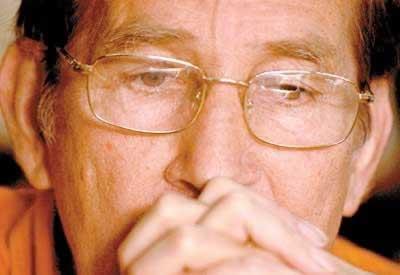 three years ago, during the III National and International Writers for Peace held in the municipality of Caicedonia , the late author Cali referred to journalism. "Peace is not the voices of the dead, for this reason we must make a national reconciliation dialogue." "The solution to this conflict is in the exercise of politics. "
 By: Francisco Calderón - El Pais
Special
What do you think of Colombian journalism?
I would like to discuss two aspects. The first, concerning how it is taking this exercise in a globalized world.
In this regard, I must say that the essence of journalism is being lost, and that newspapers are being filled by ads, text shifting production from journalists.
journalism is being done in Colombia today is a shadow of that which was done in the past.
The second aspect related to armed conflict in the country. A clear demonstration of the nature of this business is the lack of a critical nature of many media. There is a separate exercise. It is rather a journalism that says, taking advantage of the facts.
What reasons have to argue this?
I lived very close to peace talks between the Pastrana government and the FARC in Caguan.
Given this fact, the Colombian journalist did not take a reflexive stance, but took an attitude of marking.
That shows that this exercise is far from a research position at the time of announcing the fact.
This leads to the journalist is a harbinger of disaster.
Is pluralism in Colombia? Little
. The country knows only an opinion journalism, as in Colombia there is only one national newspaper.
regional publications are good, but that does not guarantee that there is a set of opinions different from those that hold the owners of that one national newspaper.
Do you believe in the powers of communication are being given a good preparation for future journalists? Unfortunately
print journalism faces the emergence of the image.
For this reason, these powers do not exist elements humanities that will enable students to develop intellectual skills such as writing exercise.
Most students do not read, making it difficult for these will contribute to the office and I say knowingly.
Therefore, communication students do not have the resources to compete professionally in the field of journalism.
What actions can be taken to overcome the armed conflict?
first thing that must be undertaken to overcome the tragedy in Colombia, is to hear the voices that have been excluded in the formation of power. Those voices that have been hit by the players in the war. When I speak of other voices, I'm referring to civil society.
is listen to these people because they are the ones that realize this country, for this reason you must create a power which they represented their aspirations and needs. The solution to this conflict lies in the exercise of politics.
If the exercise of politics is the choice for ending the conflict, then it is invalid the use of weapons by insurgents ...
policy option has cost much blood. Many have died because they sought ways to solve the country's problems.
The war has left dead on both sides, has also spilled blood of civilians who believe in political solutions. The country does not need more dead to achieve peace.
In his own words "There are many voices of civilians who have been silenced by violence. I am one of those voices. In Colombia it must reach a reconciliation of these voices, and that violence only brought us a flood of tears and pain. " Arturo Alape, painter and writer.


0 comments:
Post a Comment